
Obstacles Hinder Resumption of Full Shipping Through Vital Waterway
Following a recent agreement between the United States and Iran, which President Donald Trump declared would lead to the "opening" of the Strait of Hormuz, data indicates that maritime traffic through the crucial passage remains significantly low. While President Trump urged "Ships of the World, start your engines. Let the oil flow!", BBC Verify analysis of MarineTraffic data reveals that only seven vessels have reportedly passed through the strait since the deal was announced. In contrast, an estimated 580 ships are currently awaiting passage within the Gulf.
The Strait of Hormuz, a critical conduit for approximately one-fifth of global oil and gas supplies, was effectively closed by Tehran following US and Israeli strikes in late February. Experts point to three primary factors deterring a return to pre-conflict shipping levels: ongoing security concerns, the threat of sea mines, and the potential imposition of new tolls.
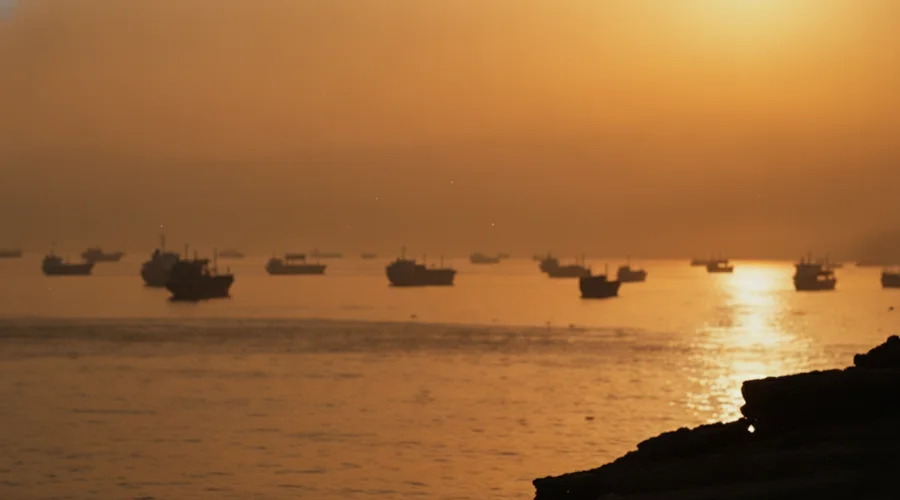
MarineTraffic data from Tuesday showed over 250 tankers and more than 330 cargo ships inside the Gulf, with around 75% of the tankers remaining stationary. Satellite imagery indicates many are congregated near major oil export terminals in Saudi Arabia, Iraq, and the UAE. The actual number of vessels could be higher, as not all ships broadcast their location.
Naveen Das, a senior oil analyst at Kpler, noted that a return to normal traffic would likely begin with an exodus of vessels currently trapped within the Gulf, a phenomenon not yet observed.
1. Persistent Security and Safety Risks
Martin Kelly of EOS Risk Group, a crisis management firm, stated that it would require exceptional bravery for a captain to navigate the Strait of Hormuz given the current circumstances. Since Iran began restricting passage in late February, it has reportedly fired upon ships attempting to cross without authorization. The US also imposed a naval blockade of Iranian ports on April 13, subsequently disabling nine "non-compliant vessels," according to US Central Command.
Despite President Trump's Sunday announcement of the "immediate removal" of the US naval blockade, he later clarified that it would remain until the deal with Iran is formally signed. Satellite images from June 15 depicted four US warships near the American blockade line at the entrance to the Gulf of Oman.
Experts suggest that ship captains, owners, and insurers are preparing their vessels within the Gulf for transit, but a "wait-and-see mentality" prevails. "No-one really wants to be the first to take that risk," Das explained, adding that some risk-tolerant companies might initiate transit, potentially building confidence for others.
Michelle Wiese Bockman, a senior analyst at Windward Maritime Intelligence, reminded that previous attempts to declare the strait open were quickly reversed, leading to numerous vessels being forced to turn back or reporting being fired upon. Kelly suggested waiting a few days, perhaps until Friday, to assess the situation.
2. The Threat of Naval Mines
Early in the conflict, Iran reportedly threatened to deploy "various types of sea mines" in the Gulf if its coastline or islands were attacked. Both the multinational Joint Maritime Information Center and Oman's Maritime Security Centre have since issued warnings about suspected "floating" objects, and US Secretary of State Marco Rubio informed a Senate committee that Iran had "mined large segments of Hormuz."
Arsenio Dominguez, secretary general of the International Maritime Organization, emphasized that mine removal is a critical first step for normalizing maritime traffic. Experts estimate that clearing the strait of mines could take anywhere from 30 days to six months. Phillip Belcher of the International Association of Independent Tanker Owners expressed concern over the lack of clarity regarding the timeline.
The southern route, near Oman, appears to be relatively clear of mines, with mine-hunting efforts expected to focus on the main route through the strait. Kelly noted that minesweepers would need to operate at very slow speeds to survey the underwater environment and then clear a channel wide enough for simultaneous inbound and outbound traffic.
The UK and France have dispatched naval vessels to the region in anticipation of a potential mine-clearing operation. British Prime Minister Sir Keir Starmer pledged the UK's "full part" in reopening the strait "as soon as possible." The British naval support ship RFA Lyme Bay, equipped with mine-hunting gear, was recently observed near RAF Akrotiri air base in Cyprus.
3. Potential for New Tolls or Fees
Historically, vessels have passed through the Strait of Hormuz, a natural waterway within Iranian and Omani territorial waters, without charge. While neither the US nor Iran are signatories to the UN Convention on the Law of the Sea, the US position maintains that free passage through the strait is part of customary international law.
During the recent conflict, Iran sought to assert sovereignty over the strait by establishing the "Persian Gulf Strait Authority," which it claimed would manage "safe passage permits." The US and its Gulf allies have consistently rejected these attempts.
Despite President Trump's Sunday announcement that the strait would open "toll free," Iran's Fars news agency reported that the new deal with the US would ultimately involve joint management of the strait by Iran and Oman, potentially including "service fees" for transit. The nature of services these fees would cover remains unclear.
Das suggested that any new payment system for using the strait could introduce a "logistical limit or a chokehold" on daily ship traffic, raising questions about enforcement, collection methods, and the reactions of other Gulf countries. While some of these details may be clarified during negotiations following Friday's deal signing, experts believe it is unlikely that Tehran will allow ships to pass as freely as before the conflict.
Dimitris Ampatzidis from Kpler concluded that while the strait might reopen quickly from a political or security standpoint, the commercial shipping system is likely to normalize gradually.
Source: Three reasons ships are not going through the Strait of Hormuz yet