Conservation Efforts Spark Pony Cull Concerns on Dartmoor
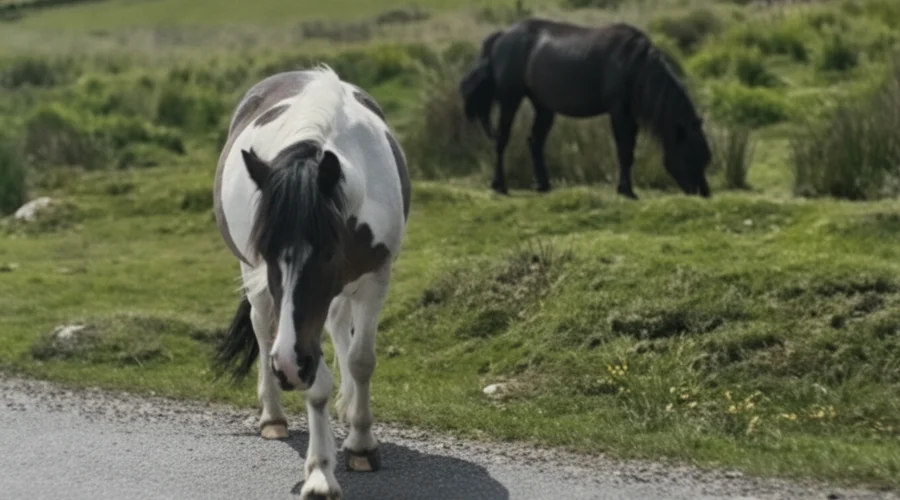
A contentious discussion has developed concerning the future of Dartmoor's iconic hill ponies. Campaigners are voicing significant apprehension that Natural England's revised approach to landscape conservation could severely impact the endangered breed, potentially leading to a substantial reduction in their numbers.
New Contracts and Livestock Reductions
Under new agri-environmental schemes introduced by Natural England, the government's conservation agency, a reduction in livestock grazing on the moor's commons is anticipated. Opponents of these changes suggest that such measures could result in the removal, and likely culling, of up to 90% of the hill pony population. Conservative leader Kemi Badenoch has publicly criticized the proposal, labeling it "total madness" and initiating a petition.
Conversely, Natural England has stated its commitment to maintaining the semi-wild pony population "for generations to come." A Downing Street spokeswoman also affirmed that the government would not permit a cull, emphasizing the animals' safety.
The Role of Dartmoor Hill Ponies and Biodiversity
Dartmoor hill ponies have been an integral part of the landscape for approximately 4,500 years. However, their numbers have seen a significant decline, with fewer than 1,000 ponies currently on Dartmoor, down from 6,000 two and a half decades ago.
Natural England's new schemes include these ponies in livestock counts, which determine payments to farmers for upland grazing that benefits nature. Campaigners warn that these new regulations could lead to a 56% to 89% cut in livestock, including the ponies. They also point out that previous livestock reductions, which historically excluded ponies, did not demonstrably enhance biodiversity on Dartmoor.
Joss Hibbs, secretary of the Dartmoor Hill Pony Association (DHPA), which represents commoners, stated: "Natural England's approach will devastate the Dartmoor hill pony population, it will make farms financially unviable and it's extremely doubtful there will be any environmental benefit."
The DHPA argues that the proposed changes would force commoners, who possess grazing rights, to prioritize commercial sheep and cattle over the ponies they have traditionally protected. The association highlights that hill ponies are crucial for the biodiversity of the landscape, being the most effective grazers of the dominant Molinia grass, which has created a monoculture on the moor. Hibbs cautioned that if commoners opt for commercial livestock for economic viability, the ponies would be lost. Conversely, choosing to maintain the ponies could render farms unviable, leading to their closure and, subsequently, the loss of the ponies themselves, as their welfare is often linked to the farmers' stewardship.
Calls for Protection and Further Review
The Devon-based charity Friends of the Dartmoor Hill Pony has advocated for long-term, legal protection for the remaining herds, recognizing their rare status. They also propose an agreed moor-wide herd size, similar to arrangements under previous contracts. Campaigners further suggest that Natural England should await the findings of the Land Use Management Group, established to implement recommendations from a 2023 government-commissioned review, which is developing a land use plan for Dartmoor by 2027.
Conservative politicians have urged the Labour government to intervene, overrule Natural England, and ensure the protection of Dartmoor's hill ponies, describing the situation as "shameful and cruel." A Downing Street spokeswoman reiterated that ponies play a "vital role in the health of its moorland habitats" and are part of the "cultural landscape." She clarified that the government would not permit a cull, and Natural England has neither recommended nor possesses the authority to order one.
A spokesperson for the Department for Environment, Food and Rural Affairs affirmed that they are working with partners, including the Dartmoor Hill Pony Association, in line with the Independent Review of Protected Site Management on Dartmoor, to ensure the preservation of semi-wild pony numbers for future generations.